

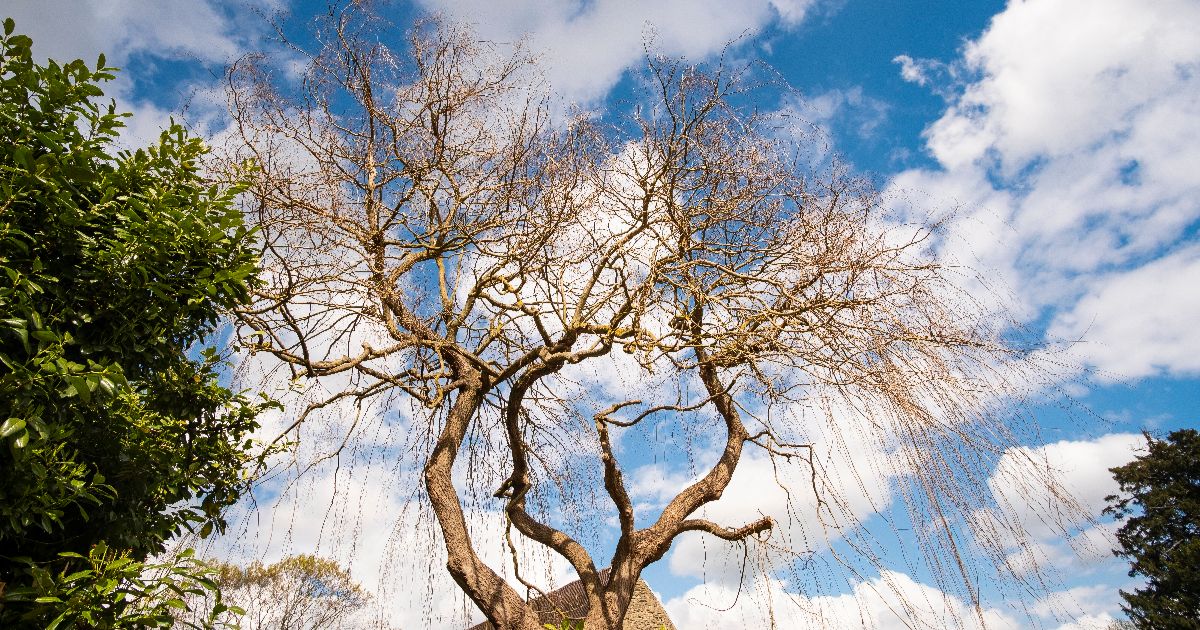
How to Tell If Your Tree Is Diseased or Dying
You can tell a tree is diseased or dying by looking for clear signs like dead branches, weak bark, fungus, rot, or sudden leaf drop. A healthy tree grows strong and steady, so any major change in color, shape, or growth is an early warning.
A diseased or dying tree becomes weak fast. Weak trees are more likely to fall during storms, drop heavy limbs, and damage cars, roofs, and fences. Early signs help you act before the problem gets worse. It also gives your tree a better chance to recover if the issue is caught in time.
Sign #1: Dead or Falling Branches
Dead branches are the easiest sign to spot. They break with little force and often fall without warning.
Look for:
- Branches with no leaves
- Branches that snap easily
- Branch tips that turn dry and brittle
- Large limbs dropping after light wind
If many branches die at the same time, the problem may be inside the trunk or root zone.
Sign #2: Sudden Leaf Problems
Leaves show stress faster than the trunk. Pay attention to changes that do not match the current season.
Warning signs include:
- Leaves turning brown early
- Bare spots in the canopy
- Leaves dropping in large amounts
- Color changes on one side of the tree
- Curled, spotted, or tiny leaves
A tree that loses leaves out of season is often fighting disease, pests, or root trouble.
Sign #3: Bark Damage or Peeling
Healthy bark protects the tree. When bark breaks down, the tree becomes open to insects, fungus, and decay.
Look for:
- Bark peeling in large sheets
- Deep cracks
- Soft or spongy areas
- Missing bark patches
- Holes from insects or wood borers
If the bark easily falls off when touched, the tree may already be dying.
Sign #4: Fungus at the Base
Fungus is one of the biggest warning signs of decay. When you see mushrooms or soft spots around the base, it often means the inside of the tree is rotting.
Signs of root or trunk rot:
- Mushrooms or shelf fungus
- Wet or sour smell at the base
- Soft, hollow, or crumbling wood
- Dark or soaked areas on the trunk
Trees with root rot fail faster, especially during storms.
Sign #5: Insect Infestation
Many insects target weak trees. If you see pests, there may be a deeper problem.
Watch for:
- Holes drilled into the trunk
- Sawdust at the base
- Ants crawling into cracks
- Termite tubes
- Beetles blocking sap flow
A strong tree can handle small bugs, but a dying tree becomes a magnet for insects.
Sign #6: Leaning or Shifting
A sudden lean almost always means the tree is failing. Even a small shift can be dangerous.
Warning signs:
- Lean gets worse after rain
- Loose soil at one side
- Raised roots on the opposite side
- Cracks in the soil around the trunk
A tree leaning toward a house or driveway is a serious risk and should be checked immediately.
When It’s Time to Remove a Dangerous Tree
Some trees can be saved with treatment. Others are too far gone and become a risk. If your tree has several major signs of decay, it may be safer to remove it before it falls. You can learn more about removal warnings by checking this guide to the top signs it’s time to remove a tree.
Spotting a Dying Tree
Trees show clear signs when they are sick, weak, or dying. By checking leaves, bark, branches, roots, and the tree’s overall shape, you can catch problems early and take action. A quick inspection every season helps keep your yard safe and prevents sudden tree failures.