

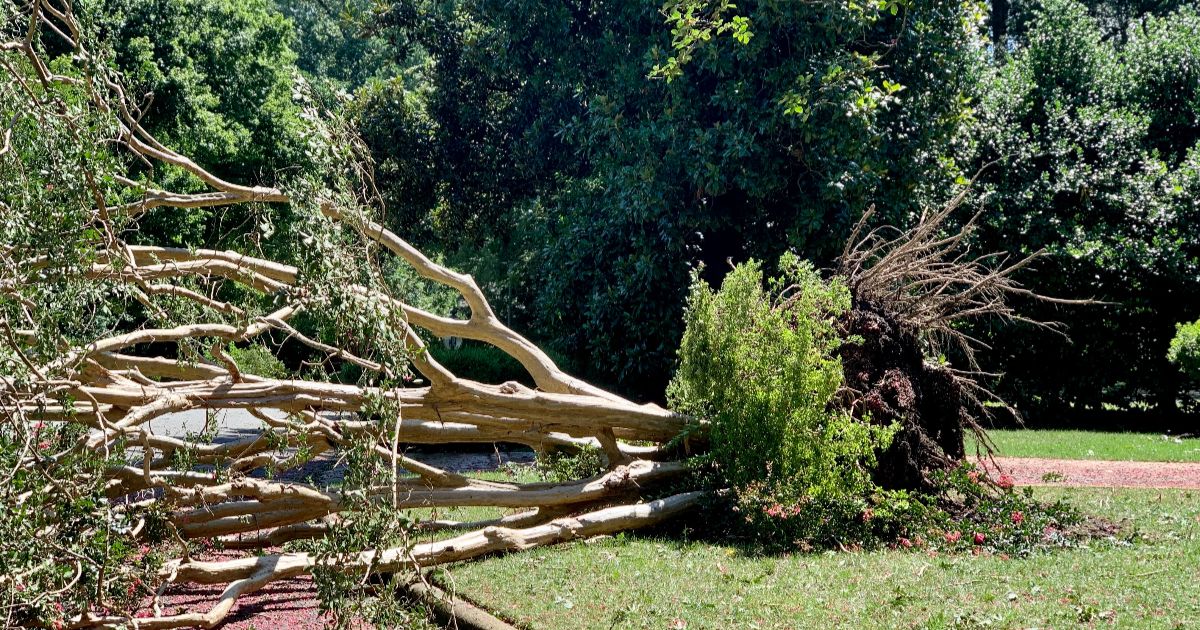
10 Emergency Tree Removal Checklist After a Storm
Emergency tree removal is often needed right after a hurricane when trees fall, lean, or break. It should always prioritize safety, as storm-damaged trees are unstable and dangerous.
A bad decision after a storm can lead to injuries, property damage, or power outages.
In this step-by-step guide, I will explain how to handle fallen or leaning trees after a hurricane.
Step 1: Stay Back and Check for Immediate Hazards
The first step after a storm is simple. Do not rush toward the tree.
Look around and check for:
- Downed power lines
- Trees touching power lines
- Trees leaning toward homes or cars
- Large hanging branches
If you see power lines on or near a tree, stay far away. Call the power company right away. Never touch a tree that is near live wires.
Step 2: Decide If the Tree Is Fallen or Leaning
Next, figure out what type of damage you are dealing with. This helps decide the safest next move.
There are two common situations:
- Fallen trees lying on the ground
- Leaning trees that did not fully fall
Fallen trees may still have tension in the trunk or branches. Leaning trees are often more dangerous because their root systems are already failing.
Step 3: Keep People and Pets Away
Storm cleanup attracts curiosity. This is risky.
Before doing anything else:
- Keep children away
- Keep pets inside
- Block off the area if possible
One sudden shift in the tree can cause serious harm. Safety zones help prevent accidents.
Step 4: Do Not Use Chainsaws Without Experience
Many storm-related injuries happen because people try to cut down trees on their own.
Chainsaws are dangerous after hurricanes because:
- Wood is under pressure
- Branches can snap back
- Trees can roll or twist
If you are not trained, do not cut storm-damaged trees. One wrong cut can cause the tree to fall the wrong way. This is when calling tree professionals saves lives.
Step 5: Check If the Tree Can Be Saved
Not every damaged tree needs to be removed. Some trees can recover.
A tree may be saved if:
- It is leaning only slightly
- Roots are mostly in the ground
- The trunk is not split
- Major branches are still intact
A tree often must be removed if:
- The trunk is cracked
- Roots are lifted or broken
- The tree leans more than before
- Large limbs are hanging
This decision should be made carefully. Guessing can lead to more damage later.
Step 6: Take Photos for Insurance Purposes
Before any work begins, take clear photos.
Capture images of:
- The full tree
- Damage to roofs or fences
- Broken branches
- Uprooted roots
Photos help with insurance claims. They also show the tree’s condition before removal. I always suggest saving these photos in one folder.
Step 7: Remove Trees Blocking Roads or Entrances First
After a hurricane, access matters.
Trees that block:
- Driveways
- Walkways
- Garage doors
- Emergency exits
It should be handled first.
Clear paths allow emergency crews, repair workers, and family members to move safely.
Step 8: Watch for Hidden Root Damage
Roots often fail before the tree falls.
Signs of root damage include:
- Soil lifting near the trunk
- Cracks in the ground
- Tree rocking in the wind
If roots are damaged, the tree can fall days or weeks later. Many homeowners think the danger is over once the storm passes. That is not always true.
Step 9: Avoid Moving Large Tree Sections Alone
Heavy tree parts look manageable but are heavier than they appear.
Never try to move:
- Large trunks
- Thick limbs
- Root balls
These can roll or shift suddenly. Back injuries are common during storm cleanup.
Professional equipment is designed for this type of work.
Step 10: Schedule Emergency Tree Removal Quickly
Timing matters after a hurricane.
Delaying emergency tree removal can:
- Increase property damage
- Put people at risk
- Attract pests
- Cause trees to fall later
Quick action helps prevent follow-up problems during the next storm or heavy rain.
What to Do After a Hurricane When Trees Are Damaged
Storm-damaged trees are among the biggest hazards after a hurricane. Fallen and leaning trees may look stable, but they often are not. Taking the right steps protects your home, your family, and your neighbors.
By staying back, checking for hazards, avoiding risky cuts, and acting quickly, you can safely handle post-storm tree damage. Emergency tree removal is not just about cleanup. It is about preventing the next accident before it happens.
If a tree looks unsafe after a storm, trust your instincts and take action right away.