

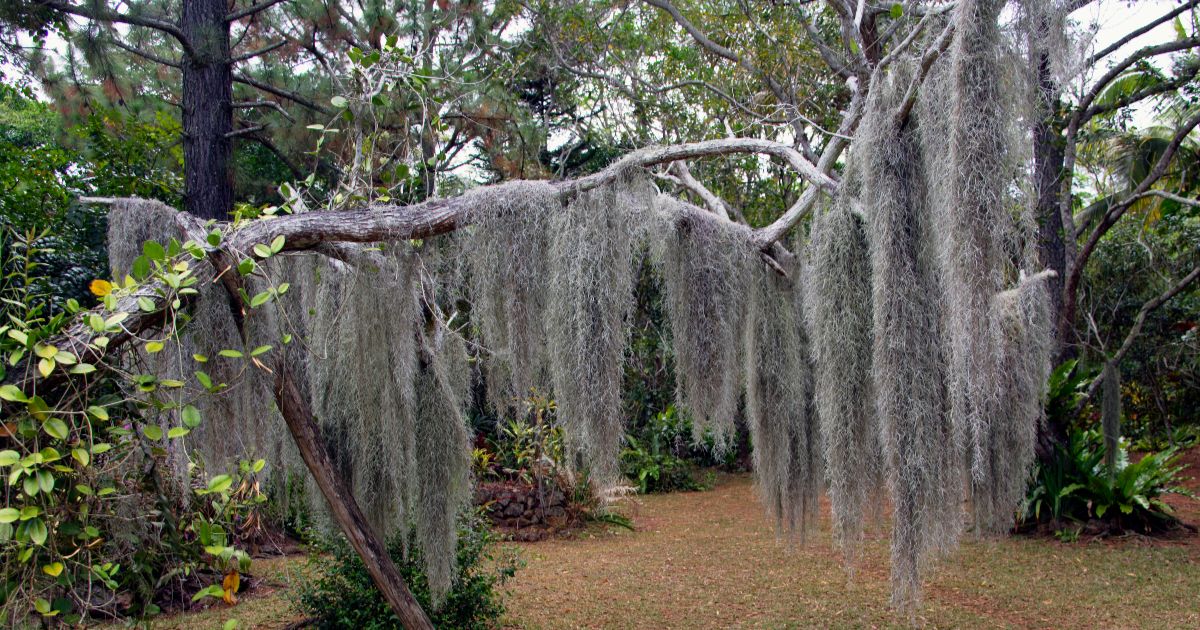
The Truth About Spanish Moss on Trees
Does Spanish Moss Kill Trees? No, Spanish moss does not kill trees.
Spanish moss is an epiphytic air plant that uses trees only for support and does not steal water or nutrients from them.
Many people in Florida worry when they see trees covered in Spanish moss. It looks heavy and messy, so it feels dangerous.
The truth is simpler. Spanish moss rarely harms healthy trees.
What Is Spanish Moss?
Spanish moss is not a moss. It is an air plant in the bromeliad family.
It does not grow roots into trees. It absorbs water and nutrients from the air, rain, and dust.
Spanish moss hangs from branches and spreads by wind and birds. It grows slowly and lives off moisture in the air.
Because of this, it does not feed on trees.
How Spanish Moss Grows on Trees
Spanish moss attaches loosely to tree bark. It does not pierce or damage the wood.
It prefers trees with wide branches and open canopies. Oaks, cypress, and maples are common hosts.
It grows best in:
- Warm weather
- High humidity
- Areas with clean air
This is why it blossoms in South Florida.
Does Spanish Moss Take Nutrients from Trees?
No, Spanish moss does not take nutrients from trees. It makes its own food through photosynthesis.
Trees pull water and nutrients from the soil through their roots. Spanish moss does not connect to that system.
The tree and the moss live separate lives. One does not feed the other.
Why People Think Spanish Moss Is Harmful
Spanish moss can make a tree look unhealthy. Heavy growth often appears on older or slow-growing trees.
This creates confusion. The moss did not weaken the tree. The tree already had low growth or stress.
Spanish moss also stands out more on trees with fewer leaves, which adds to the myth.
When Spanish Moss Can Be a Problem
Spanish moss can cause issues in specific situations.
It may:
- Block sunlight on weak trees
- Add weight to already damaged branches
- Hold moisture on dying limbs
In these cases, the moss adds stress, but it is not the root cause.
Healthy trees usually handle Spanish moss without trouble.
Spanish Moss and Tree Health
Spanish moss prefers trees with slow growth. That makes it a useful sign, not a threat.
If a tree has:
- Thin leaves
- Dead branches
- Little new growth
Spanish moss may become more visible.
The real issue is often soil, water, disease, or root damage.
Can Spanish Moss Kill Weak Trees?
Spanish moss does not kill trees on its own. In rare cases, it may accelerate the decline of trees that are already failing.
The tree dies from poor health, not from the moss.
Removing moss without fixing the real problem will not save the tree.
Is Spanish Moss Bad for Oak Trees?
Spanish moss does not harm oak trees. Live oaks commonly host Spanish moss in Florida.
Oaks have strong branches and wide canopies, which make them ideal supports.
Many healthy oaks host Spanish moss for decades without issues.
Does Spanish Moss Cause Pests or Disease?
Spanish moss does not cause disease in trees.
It can house insects such as spiders and mites, but they do not harm the tree.
The risk is mainly human discomfort, not tree damage.
Should Spanish Moss Be Removed?
Spanish moss does not need to be removed in most cases. Removal is cosmetic, not medical.
Removal may help when:
- Branches are already weak
- Moss blocks large amounts of light
- Storm damage increased branch stress
Even then, removal should be careful to avoid harming the tree.
Is Spanish Moss a Sign of a Dying Tree?
Spanish moss is not a sign of a dying tree. It often grows on older, healthy trees.
Tree age, not tree health, explains most heavy growth.
A tree with Spanish moss can still be strong, stable, and alive.
Benefits of Spanish Moss
Spanish moss provides benefits to the environment.
It:
- Gives shelter to birds
- Helps trap moisture in the air
- Adds habitat for small insects
It is part of Florida’s natural ecosystem.
Common Myths About Spanish Moss
Some myths still spread today.
False beliefs include:
- Spanish moss is a parasite
- It steals nutrients
- It kills trees
None of these are true.
The Real Truth About Spanish Moss on Trees
Spanish moss does not kill trees, nor is it dangerous. It lives on trees without feeding on them and rarely causes harm.
Spanish moss is a normal part of the landscape in South Florida. Healthy trees handle it with ease. If a tree shows problems, the cause is almost always something else.
Understanding this helps prevent unnecessary removal and protects healthy trees.