

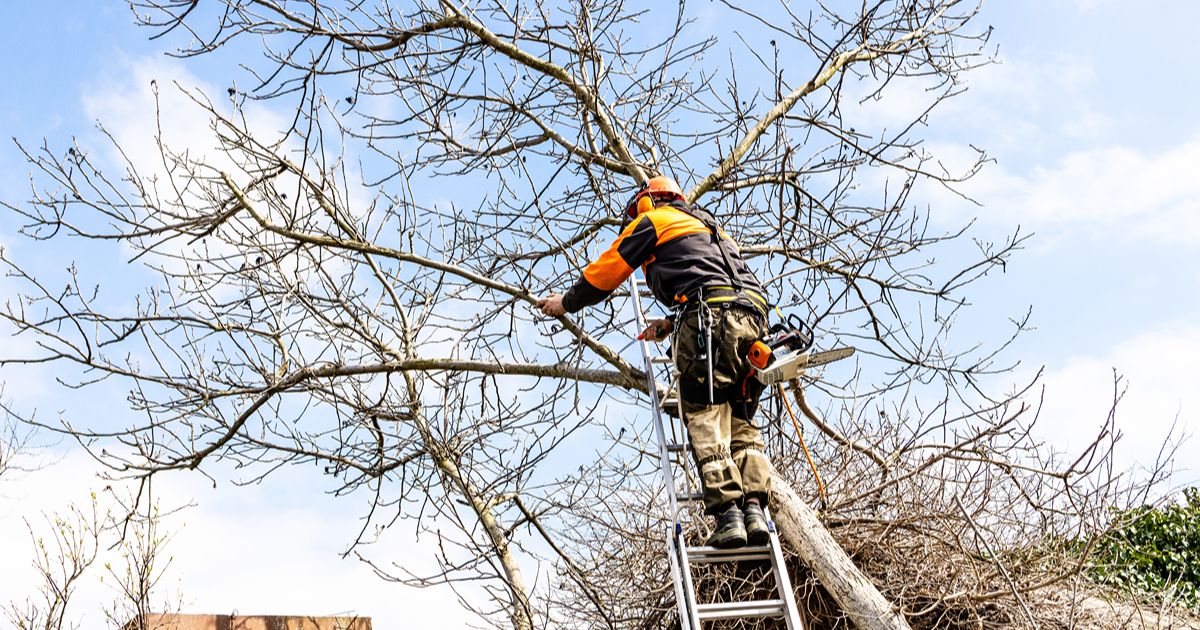
Do You Need Tree Trimming or Tree Pruning in Miami?
If you are choosing between tree trimming or pruning in Miami, trimming fixes shape and size while pruning fixes health and safety.
Both jobs cut branches, so the two words get swapped on the phone every day.
What your tree needs depends on the tree’s condition, not on the word you used when you called.
Guessing wrong costs money and can leave a cracked limb over your roof.
What Tree Trimming in Miami Covers
Tree trimming cuts back live growth to control a tree’s shape and size. You book it when branches crowd a roofline, block a walkway, or push toward a power line. The tree does not have to be sick or damaged to need it.
This is routine maintenance. A healthy tree that outgrew its spot is a trimming job, and so is a ficus hedge that stopped respecting the property line.
Plenty of trims here get booked to meet an HOA appearance standard.
Palms sit in their own category. A palm has one growth point at the top, so removing too many fronds sets it back in a way a hardwood would shrug off.
Our palm trimming tips cover what a good cut leaves behind.
What Tree Pruning Does That Trimming Does Not
Pruning removes branches that are dead, diseased, cracked, or rubbing. The goal is the health of the tree and the safety of what sits below it, not the outline of the canopy.
Someone pruning a tree is hunting for specific problems: deadwood that could drop in a storm, disease moving down a limb, or two branches wearing a wound into each other.
The cut itself is different. A pruning cut lands just outside the branch collar so the tree can seal the wound on its own.
A shaping cut can land anywhere along the limb, and a cut in the wrong spot leaves a stub that rots inward for years.
When a tree needs weight taken off the ends of its limbs instead of a few branches removed, crown reduction sits between the two services.
How to Tell Which Service Your Tree Needs
Look at the problem, not the tree overall. Overgrown but healthy means trimming. Dead, cracked, oozing, or fungus means pruning.
Signs that point to pruning:
- Bare branches while the rest of the canopy is full
- Cracks, splits, or hollow spots in a limb
- Bark that is peeling, discolored, or oozing
- Branches rubbing each other or scraping a structure
- One limb hanging noticeably lower than the ones around it
Any of these can also be an early sign the tree is diseased or dying, which turns the visit into a health assessment rather than a haircut.
What Booking the Wrong Service Costs You
Booking a trim when the tree needs pruning leaves the hazard exactly where it was. The yard looks tidy, and the split limb is still hanging over the driveway.
The mistake runs the other way too. A full prune on a tree that only needed its canopy pulled off a roof costs more than the job called for, because hazard work takes more rigging and more time per limb.
A crew quoted for a shape trim may also arrive without the gear a limb over a roof requires, which turns into a second visit.
Sometimes the inspection turns up enough decay that neither service helps, and you are looking at the signs it needs removal.
How Often Miami Trees Need Trimming or Pruning
Trimming runs on a rough schedule. Pruning runs on condition. Our growing season barely stops, so canopies here fill back in faster than they do in cooler states.
A tree with no visible damage may go a long stretch without pruning. A tree that just took a tropical storm may need it that week, depending on when it was last serviced.
Ahead of hurricane season, get the tree looked at before the storms rather than after.
Cutting weak wood out before tropical storms is cheaper and safer than clearing it off a roof afterward.
Where Local Rules Change the Answer
Trimming a healthy tree on your own property does not raise the same questions that removal does. Heavy cuts on a protected species can.
If a contractor proposes taking off most of a canopy, check with Miami-Dade County first.
This applies to Miami-Dade only. Broward and Palm Beach write their own rules.
Get the Tree Looked At Before You Name the Service
Have someone assess the tree before you decide what to call it. What you see from the ground is a small share of what shows up once a climber is in the canopy.
The University of Florida’s IFAS Extension ties pruning decisions to a tree’s structure and condition rather than to a fixed calendar.
Working with a certified Miami arborist means that call happens before the cutting, not after.
If a limb is cracked, hanging, or near a power line, stop and bring in a professional rather than working it from a ladder.
Booking the Job Your Tree Actually Needs
If the tree looks healthy and is just crowding your space, book tree trimming in Miami and ask the crew to flag anything that looks like a health problem while they are up there.
If you are seeing deadwood, cracks, or fungus, say so when you call, so the right crew and the right gear show up the first time.