

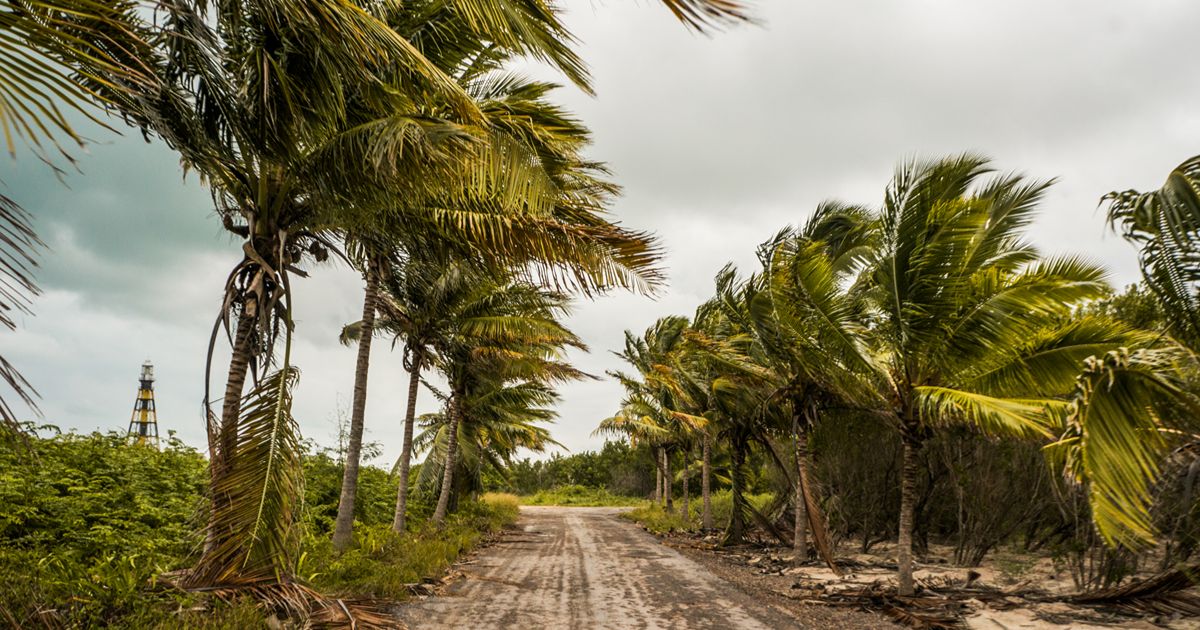
Which Trees Survive Hurricanes Best in Florida?
The trees that survive hurricanes best in Florida are sabal palms, live oaks, gumbo limbos, baldcypress, and small native trees like stoppers and cocoplum.
That ranking comes from University of Florida researchers who measured thousands of urban trees after major storms, starting with Hurricane Andrew in 1992.
But staying upright is only half the story.
A tree can ride out a storm and still drop half its limbs on your roof.
Which Trees Survive Hurricanes Best in South Florida?
Native palms and native trees with dense wood hold up best. The UF/IFAS wind resistance lists put sabal palm, live oak, gumbo limbo, and baldcypress in the top group for South Florida.
Those lists combine storm field counts, a survey of 85 tree experts, and published research.
Native trees also lost fewer branches. In Hurricane Jeanne, native trees lost 21% of their branches, compared to 36% for non-native trees.
Palms That Keep Their Heads
Palms beat other trees in UF’s South Florida counts. In Hurricane Charley, 88% of palms stayed standing, compared to 77% of other trees.
A palm can lose every frond and still keep the growing bud at its top. That bud is how it comes back.
The sabal palm, Florida’s state tree, performed the most steadily. Smaller palms did even better. Pygmy date palms hit 100% survival in both Charley and Jeanne.
Areca and Manila palms scored 89% or higher. If you are choosing palms, the split between native and non-native palms matters here too.
Shade Trees With Strong Wood
Live oak survived 97% of Hurricane Jeanne and 78% of the stronger Charley. Gumbo limbo stood at 89% in Charley.
Baldcypress reached 95% in Charley, the best of any conifer measured.
Other trees in the top group fit small Miami yards well: buttonwood, cocoplum, white stopper, lignum vitae, dahoon holly, and southern magnolia. Many of them stay short.
A shorter tree gives the wind less to push against.
Why a Standing Tree Can Still Be a Storm Loss
Survival counts only tell you which trees did not fall. So UF researchers ran a second count. They counted any standing tree that lost half or more of its branches as dead. The results shifted a lot.
Black olive is the clearest case. It was one of the poorest survivors in Charley at 57%.
In Puerto Rico, after Hurricane Georges, 84% stayed standing, but only 59% passed the second count.
Royal Poinciana dropped from 94% standing to 68%. Even live oak can stand firm and still shed big limbs in 145 mph winds.
That matters for your house. A broken limb can damage a roof or a car just like a whole tree can.
A tree that “made it” may still need heavy cleanup or removal.
Which Trees Fail Most Often in Florida Hurricanes?
The lowest wind resistance group includes Australian pine, melaleuca, queen palm, Norfolk Island pine, weeping fig, African tuliptree, jacaranda, silk oak, Washington fan palm, and avocado. Mango and citrus sit one step up, in the medium-low group.
Some numbers stand out. Only 4% of Australian pines survived Hurricane Andrew. Queen palms survived at 42% in Andrew and 69% in Charley.
Avocado made it at 46% in Andrew. Australian pine and melaleuca are prohibited from use in Florida.
Height changes the picture too. Washington fan palms did well in Charley, averaging about 13 feet tall.
They did worse in Jeanne, where they averaged about 36 feet. Taller palms catch more wind. Our list of dangerous trees to avoid covers more species that cause trouble near homes.
Already have one of these trees close to the house? Removing it may still need county approval, so check the rules on a tree removal permit first.
Does Placement and Care Matter as Much as Species?
Species sets the odds. Placement and care raise or lower them. UF/IFAS found that trees with more root space, trees that were pruned, and trees growing in groups all held up better in wind.
Give Roots Room
A tree squeezed between a slab and a sidewalk has poor anchorage. Royal palms show how much soil matters. Only 63% survived Andrew, but 87% survived Charley in deeper Gulf Coast soils. Before planting, check how far to plant from walls, pipes, and power lines.
Prune the Right Way
Pruning made broadleaf trees more wind-resistant in the UF study. That means thinning and taking out weak limbs, not cutting the top off. Plan pruning before storm season and book tree trimming in Miami early in the year.
Support the Trees You Want to Keep
A good tree with one weak union does not always need to come down. Cabling and bracing can support split stems on a valuable tree. It will not save a tree with a rotten base or a hollow trunk.
Know the Limits
No tree is windproof. UF/IFAS warns that its lists should be used with caution. Soil, tree age, health, structure, rainfall, and storm duration all change the outcome.
Plan Your Next Tree Around the Next Storm
Walk your yard and note every tree that could reach your house, car, or a power line if it fell.
Match each one to the lists above.
If a tree is in the lowest group, or shows cracks, a new lean, or dead limbs, have a certified arborist inspect it before next June.
If a tree is touching a power line, stay back and call your utility.