

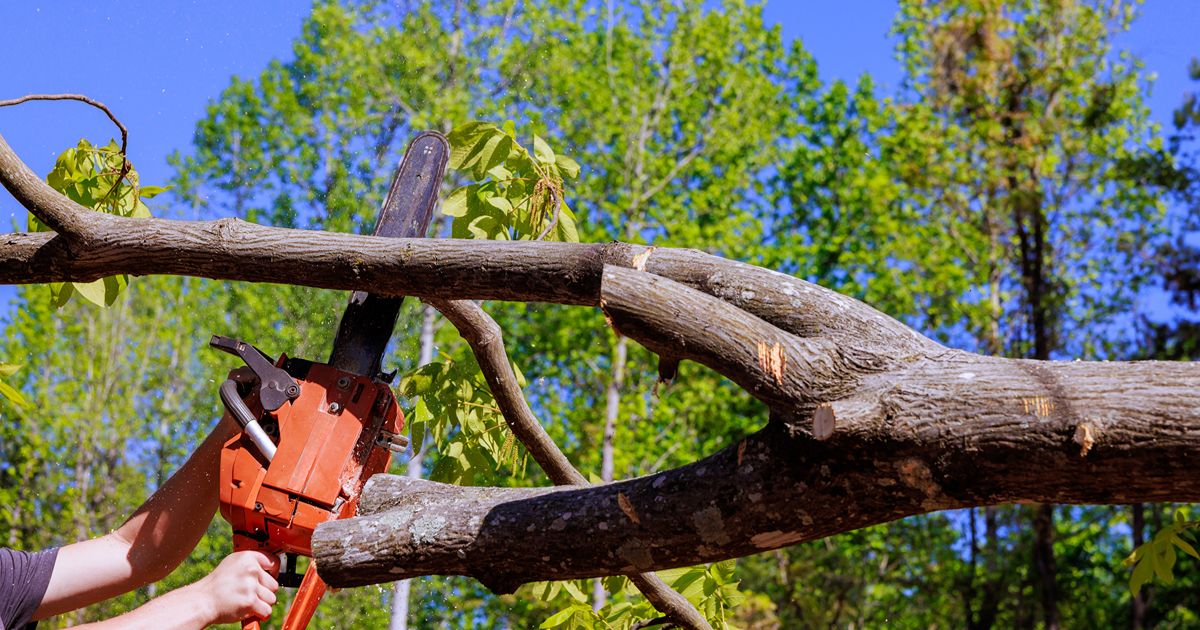
Tree Removal Permit Rules in Broward County: Breakdown
Most trees with a trunk 3 inches or wider need a tree removal license before anyone cuts them down in Broward County.
The tricky part is knowing which office issues it. The county runs the program in some places, while most cities run their own.
This breakdown shows how to find the right office and what each step looks like.
Who Issues Tree Removal Permits in Broward County?
Your address decides who issues the permit. The county ordinance covers all of Broward, but the county steps aside in cities with rules at least as strict.
According to the Broward Tree Preservation Program, the county handles:
- Unincorporated Broward County
- County-owned property and county environmental lands
- Broward County School Board sites
- Hillsboro Beach, Lauderdale By The Sea, Lauderdale Lakes, Lazy Lake, Lighthouse Point, North Lauderdale, Pembroke Park, Sea Ranch Lakes, and Wilton Manors
The county’s printed brochure also lists Tamarac, which remains under the county’s Tree Preservation Program.
Tamarac also issues its own tree-removal license, so property owners generally need both the county license and the city approval.
Everywhere else, such as Fort Lauderdale, Hollywood, Coral Springs, Pembroke Pines, and Plantation, the city issues the permit.
Some places want both. Wilton Manors, for example, requires a city permit after you get the county license.
How the Broward County Tree Removal License Works
The county license follows a set path. You apply, the county reviews it, and you replace what you remove.
- Apply. Submit a Tree Removal License Application through the county’s ePermits site (search “Tree Removal”) or by mail. List each tree’s species, trunk diameter, and the reason for removal.
- Pay the fee. The county fee schedule lists $100 for the initial Tree Removal License on a developed single-family or duplex residential lot.
- Plan to relocate or replace. The county expects trees to be moved unless moving them isn’t feasible. Removed trees must be replaced with enough new trees to replace 100% of the canopy area removed at maturity; the county calculates the requirement based on the removed tree’s canopy and the replacement trees’ assigned canopy credits, rather than a fixed one-for-one tree ratio.
- Wait for approval. Do not cut until you have the license.
If your yard has no room for new trees, the county may let you pay into its Tree Preservation Trust Fund instead.
If you do have room, pick good replacement trees that fit the space at full size.
Cutting first costs more. The fee schedule adds $100 for each tree 18 inches or wider that was removed before the license was issued. That is in addition to any violation penalty.
Which Trees Are Exempt From a Permit?
Nuisance trees are the main exemption. The county’s 311 answers also name hazard trees and trees near power lines.
The full nuisance list sits in Section 27-404 of the county code: Brazilian pepper, poisonwood, melaleuca, Australian pine, bischofia, earleaf acacia, Norfolk Island pine, schefflera, lead tree, and carrotwood. Brazilian pepper shows up on nearly every local nuisance list.
City rules split even on exempt trees:
- Oakland Park needs no permit for Brazilian pepper, poisonwood, Australian pine, melaleuca, Norfolk Island pine, or schefflera.
- Plantation still wants a permit for nuisance trees, but it charges no fee.
- Coral Springs requires your HOA’s approval for every residential removal permit. Read your HOA tree rules before you apply.
Storm damage adds another layer. Use a storm removal checklist to document damage before cleanup.
The Florida Law That Can Skip the Permit
Florida Statute 163.045 bars local governments from requiring a permit, fee, or replacement tree on residential property when the owner has the right paperwork. That paperwork must come from an ISA-certified arborist or a Florida-licensed landscape architect.
Three details decide if you qualify:
- The property type. The law covers a single-family, detached home on a lot used as a single-family residence. Townhomes, condos, and commercial lots fall outside it.
- The level of risk. The tree must pose an “unacceptable risk.” That means removal is the only practical way to bring its risk below moderate.
- The assessment method. The arborist must follow the ISA’s Tree Risk Assessment best practices (Second Edition, 2017) and sign the report.
A healthy tree you simply dislike does not qualify. The law also speaks to local governments, not HOAs, so check your HOA rules separately.
If you are unsure, compare your tree to the removal warning signs and get a formal risk assessment.
This is general information, not legal advice. If you have a dispute with a city or HOA, talk to a Florida attorney.
Tree Trimmers Need a Broward License Too
Anyone who advertises, offers, or performs tree trimming in Broward must hold a Broward County Tree Trimmer License.
The county issues Class A and Class B licenses, each good for up to two years. A licensed person must be on site during the work.
The county also treats bad pruning as tree abuse. Topping, hatracking, stub cutting, and excessive lifting can bring an order for corrective pruning or removal and replacement.
Ask for the license number as one of your questions to ask first. Miami-Dade handles this differently, so compare its trimming permit rules if you own property in both counties.
Make One Call Before Anyone Cuts
The cheapest permit is the one you get before the saw starts. Check whether your address falls under the county or your city, then call to ask whether your tree needs a license.
The county Tree Preservation Program answers at 954-519-1483. If you want a crew that handles the paperwork, call us today!