

Does Stump Grinding Kill Roots?
No, grinding a stump down does not kill the roots spread out under your yard.
Stump grinding chews up the visible stump and a few surface roots, but the deeper root system stays in the soil.
Those leftover roots slowly rot away on their own, and in most cases, they never grow back.
A handful of tree types can sprout new shoots from old roots, and I’ll walk you through those, too.
What Stump Grinding Actually Removes
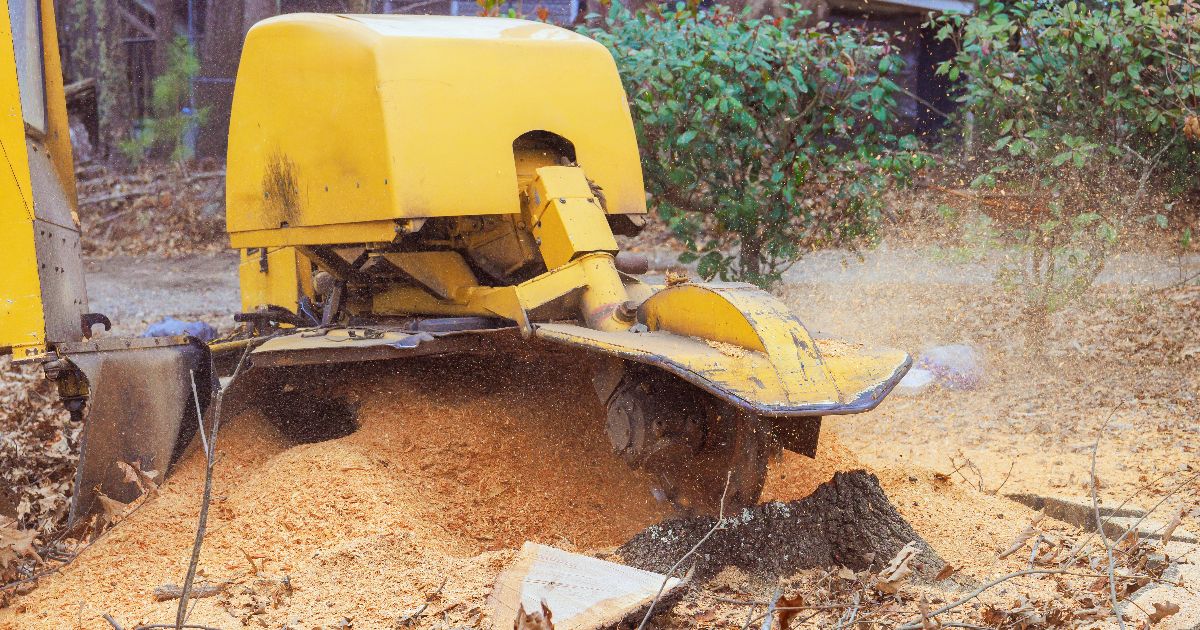
Stump grinding removes the stump and grinds it into mulch, usually 4 to 12 inches below the soil line.
A machine with a spinning wheel of carbide teeth shaves the wood down bit by bit.
The grinder reaches the stump and the thick roots near it, but it does not chase the long roots that stretch out across your yard.
This is the main reason people get confused. They expect the whole root system to vanish.
What they really get is a clean surface with a hidden network of tree roots still resting underground.
Does Stump Grinding Kill the Roots Left Behind?
Stump grinding does not directly kill leftover roots, but those roots are already on their way to dying.
Once the trunk and stump are gone, the roots lose their connection to leaves. No leaves means no food, since trees feed themselves through their leaves using sunlight.
Without food, the roots cannot stay alive for long. They stop growing and begin to break down. So the grinding itself is not what kills them. The loss of the leaf canopy is the real cause.
How Long Buried Roots Take to Rot
Leftover roots usually take 3 to 10 years to fully break down. The exact time depends on the tree species, the root size, and your soil.
Thick oak roots rot slower than thin pine roots. Warm, damp soil speeds things up, while dry or packed soil slows them down.
You don’t have to wait around doing nothing. A few simple steps help the roots break down faster:
- Keep the soil moist near the old root zone.
- Add nitrogen-rich material, like compost or grass clippings, over the area.
- Cover the spot with mulch to hold in moisture and heat.
Most of the time, the roots cause no trouble while they rot. They sit quietly underground and turn into soil. You can plant grass directly over the area once the grinding mulch has settled.
Trees That Can Sprout Again From Leftover Roots
Most trees never regrow after grinding, but some species fight back by sending up new shoots from their roots. These shoots are called suckers.
They pop up as small green sprouts a few feet from the old stump and can spread fast if you ignore them.
Common trees that sucker from roots include:
- Poplar and aspen
- Black locust
- Willow
- Elm
- Sweetgum
- Tree of heaven
If you had one of these, grinding alone may not end the problem. The roots can keep pushing up new growth for a year or two. I’ve seen a single ground-out poplar send up a dozen sprouts across a lawn the next spring.
When You Need Full Root Removal Instead of Grinding
You need full root removal when the roots threaten pipes, a foundation, or a future build site. Grinding leaves roots in place, so it works fine for most yards. But some jobs call for pulling the roots out completely with full stump removal.
Full removal means digging up the stump and major roots with an excavator or by hand. It costs more, makes a bigger mess, and leaves a large hole to fill. Still, it is the right call in a few cases:
- You plan to pour a patio, driveway, or foundation over the spot.
- Roots are pushing into sewer lines or septic systems.
- You want to replant a new tree in the exact same place.
- The species suckers heavily, and you want zero regrowth.
It also helps to know how tree removal and stump work differ, since they are two separate jobs with different costs.
If you plan to replant, clear the old roots first so the new tree does not end up with girdling roots that choke its trunk later.
The Real Answer on Roots and Grinding
Stump grinding does not kill or remove the roots under your yard, but it sets them on a path to rot away over the next several years.
Most trees never come back, since they lose the leaves they need to live.
Keep an eye out for suckers from species like poplar or locust, and cut them as they show up.
If roots threaten a pipe or a building site, ask a certified arborist about full removal instead.