

Tree Topping in Miami: Why It Harms Your Tree (and What to Do Instead)
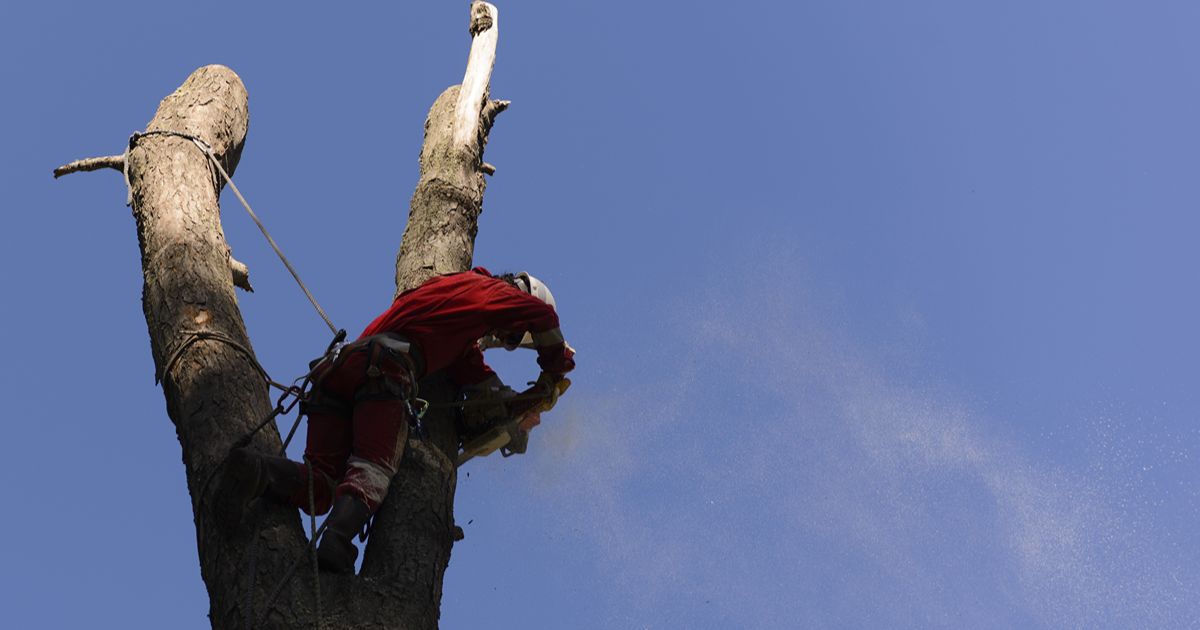
Tree topping cuts a tree’s main branches or trunk back to stubs to force the height down.
It looks like a fast fix for a tree that crowds a roofline, but topping a tree in Miami creates a weaker tree, not a safer one.
The height comes back within a few seasons, and it comes back attached badly.
You end up with a tree that costs more to manage and fails sooner in a storm.
What Tree Topping Actually Is
Topping cuts a tree back to a set height with no regard for its branch structure.
Trimming and pruning follow the tree’s growth pattern and cut at specific points. Topping picks a line and takes everything above it.
The request almost always comes from a real concern. The tree feels too tall, it leans toward the house, or hurricane season is coming. The worry is fair. The method is what fails.
Topping also goes by other names on estimates. Hat racking, rounding over, and heading back all describe the same cut. If a bid uses any of those, ask exactly where the cuts land.
Why Tree Topping Harms Your Tree
Topping strips the leaves a tree uses to make energy, so the tree answers with a survival response instead of normal growth. That response is the problem.
The tree pushes out a flush of thin, fast shoots called water sprouts near each cut.
Those shoots grow from just under the bark rather than from the wood inside the limb, so they never anchor the way a natural branch does. They also grow fast.
The cuts do damage on their own. A tree seals a wound at the branch collar.
A topping cut lands mid-limb, where no collar exists, so the wound stays open longer, and decay moves down into the limb.
Two or three years later, the tree carries heavy regrowth on top of rotting stubs.
The Storm Risk Topping Creates in South Florida
A topped tree tends to fail more in high wind, not less.
The weak attachment points are exactly what tear loose when wind loads the canopy, and by year three there is enough new growth up there to catch that wind.
Healthy structure protects a property better than a shorter tree does.
The way trees protect against storms depends on a canopy that lets wind pass through it, which is the opposite of the dense regrowth topping produces.
What Topping Costs You Over the Next Few Years
Topping solves the height for a season and then bills you again. The regrowth comes back fast and uneven, so the tree needs cutting again sooner than a properly reduced tree would.
Sometimes the decline goes far enough that the tree has to come out.
Removal costs more than the topping did, and you lose the shade, the canopy, and the property value a mature tree carries.
What to Do Instead of Topping a Tree
Pick the fix that matches the actual concern. If you want the tree shorter but sound, crown reduction cuts back to a lateral branch large enough to take over as the new leader, so the tree keeps a working structure.
If the problem is a few limbs over a roof or near a line, targeted work handles those limbs and leaves the rest of the canopy alone.
That is what most tree trimming in Miami calls turn out to need.
If storm safety is the real worry, height is not the lever. Reinforcing before tropical storms targets weak and damaged wood instead of removing healthy canopy.
If the tree already looks like it is struggling, find out why before anyone cuts.
A tree that is diseased or dying needs a different plan than a healthy tree that simply got tall.
The International Society of Arboriculture treats topping as one of the most harmful things you can do to a tree, and its standards point to reduction cuts as the alternative.
Which Miami Trees Take the Worst Damage
Palms should never be topped. A palm grows from one point at the top of the trunk, and cutting into it kills the palm outright.
There is no regrowth response to fall back on, which is why palm trimming tips focus on fronds rather than height.
Hardwoods can attempt regrowth, but that ability varies by species and by how much canopy came off at once.
Before agreeing to any height reduction, have a certified Miami arborist look at the tree. If a limb sits near a power line, call the utility rather than a crew.
Getting Height Under Control Without Wrecking the Tree
A tree that feels too tall is a structure question, not a length question.
Have an arborist identify what is driving the concern, then use a cut that leaves the tree able to hold itself up.
Ask any bidder where the cuts land and which limb takes over as the leader.
If nobody can answer that, the bid is a topping job under a different name.