

Do Tree Stumps Attract Termites and Pests in Miami?
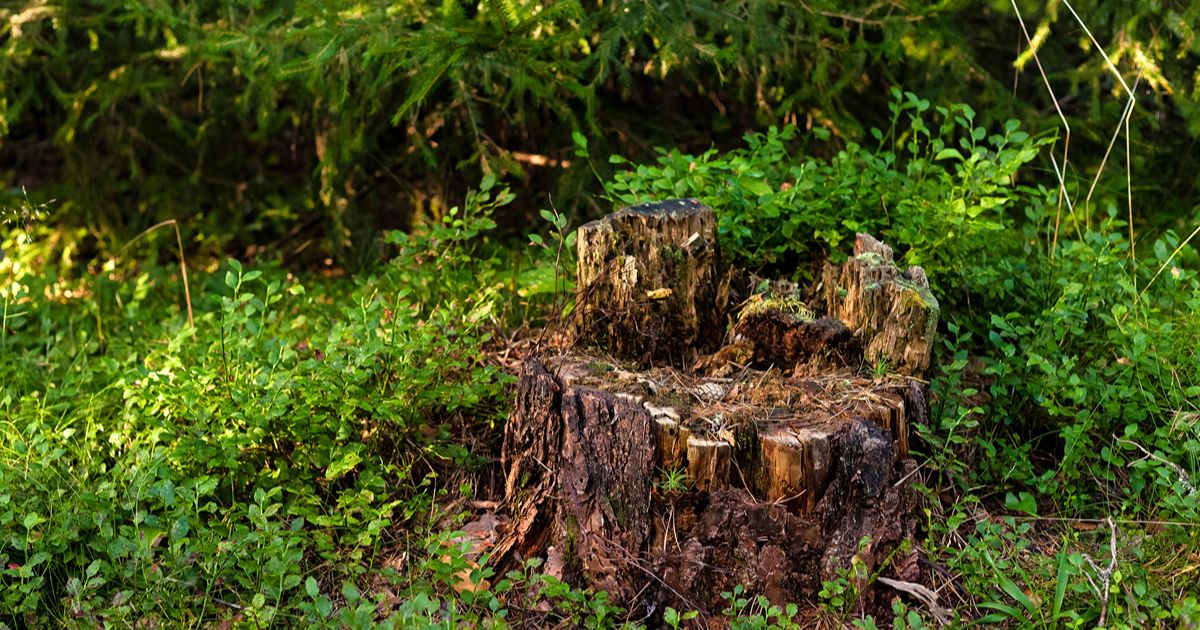
Yes, tree stumps attract termites and other pests, but not in the way most homeowners picture it.
A stump does not bring termites to your property. Subterranean termites already live in the soil across South Florida.
What a rotting stump does is feed them, shelter them, and hide their activity a few feet from your foundation.
That last part is the real problem.
Do Tree Stumps Attract Termites, or Just Feed Them?
A stump feeds termites that are already nearby. Subterranean termites forage through the soil looking for cellulose.
A dead stump with wet, decaying wood is an easy meal, so a colony that finds one will build up right there.
That distinction matters because grinding a stump does not give you a termite-free yard.
UF/IFAS researchers have found Asian and Formosan subterranean termites hollowing out living trees in South Florida parks, where the damage stays hidden until the tree fails.
Dead wood is preferred. It is not required.
Miami sits in a tough spot for this. UF/IFAS entomologists have documented that the Miami and Fort Lauderdale area is the only place in the continental United States where Asian and Formosan subterranean termites share the same territory, and their 2016 projection that roughly half of structures in urban South Florida would be at risk by around 2040 was confirmed as on track in a 2026 study.
Which Pests Actually Move Into a Miami Stump
Termites get the attention, but they show up with company. In South Florida yards, a decaying stump usually hosts some mix of these:
- Subterranean termites, working from the soil up through the root collar
- Carpenter ants, which do not eat wood but hollow out soft, wet sections for nesting
- Wood-boring beetles, which arrive as the wood dries and cracks
- Palmetto bugs and roaches, using the loose bark and root voids as harborage
- Fungi and rot organisms, which soften the wood and make it easier for everything else
Rodents and snakes use the root cavities too, though that is more common with large stumps left for years.
Keep in mind that tree removal and stump work are two separate jobs, and plenty of homeowners find out only after the crew leaves that the stump was never in the quote.
Distance From the House Is What Really Matters
A stump twenty feet out in the back corner of a lot is a low concern. A stump six feet from a slab, sitting in an irrigation zone, is a different conversation entirely.
Three factors raise the risk:
- Proximity. The closer the food source is to the structure, the shorter the foraging path to your framing, door jambs, and window bucks.
- Moisture. Sprinkler overspray and poor drainage keep the wood soft and the soil damp, which is exactly what subterranean colonies want.
- Contact. Stumps connected to fence posts, wood decks, or mulch beds that touch the house give termites a covered route.
The Florida Department of Agriculture and Consumer Services recommends an annual inspection by a licensed pest control company, along with a non-repellent soil treatment or in-ground bait system around the structure.
Removing a stump is not a substitute for that. It removes one food source near the perimeter.
Grinding Does Not Take Out All the Wood
Grinding cuts the stump below grade and turns it into chips. It leaves the lateral root system in the ground. Those roots left behind are still cellulose, and on a mature ficus or oak they can run a long way under the yard.
For most homeowners, that is fine. Roots decay slowly and quietly, and they do not create the concentrated, above-grade food pile that a whole stump does.
But if termites are already active in the stump, we recommend having the pest control company treat before or right after the grind, not months later.
The other detail crews skip: the grindings. Leaving a mound of fresh wood chips over the hole recreates the food source you just paid to remove. Ask whether the chips get hauled off.
Our comparison of grinding versus full removal covers where each option makes sense.
Palm Stumps Carry a Different Risk
Palms have a fungus problem, not a bug problem. Ganoderma butt rot kills palms. The fungus spreads through spores.
Those spores come from the shelf-shaped growths on the trunk, called conks.
When an infected palm comes down, UF/IFAS says to remove or grind out as much of the stump and root system as you can.
They also say not to plant a new palm in that same spot. The fungus stays alive in the soil.
A cut palm stump can produce conks for a long time, quietly seeding every other palm on the block. If you lost a palm and saw a hard, half-moon shelf near the base, treat the stump as a priority.
It belongs in the same category as the other tree diseases here that spread faster than people expect.
When you replace it, choosing a replacement palm for a different part of the yard is the safer move.
How to Decide If Your Stump Has to Go
Walk out and measure the distance from the stump to your exterior wall, then check whether the wood is soft enough to push a screwdriver into.
Close and soft means deal with it now.
Far and hard means you have time. Either way, a quote for stump removal in Miami costs nothing, and it is cheaper than the pest inspection that follows a swarm in your living room.